Close

Zero-CO₂ Circular Waste Treatment Subcritical Water Unit

ウォーターアリンテック株式会社

Challenges

Challenges in Industrial Waste Treatment

ウォーターアリンテック株式会社

Increasing Environmental Burden from CO₂ Emissions

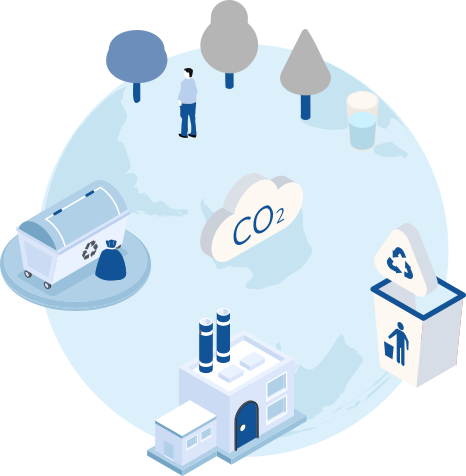
As achieving carbon neutrality by 2050 becomes an urgent global goal, conventional incineration continues to emit large amounts of CO₂. Emissions from incineration facilities account for about 2% of Japan’s total emissions, and companies are increasingly required to take social responsibility by reducing CO₂ emissions in their waste treatment processes.

ウォーターアリンテック株式会社

Tightening landfill capacity and rising disposal costs.

The remaining capacity of Japan’s final disposal sites is estimated at about 21 years, with urban areas facing even more severe shortages. Due to difficulties in securing landfill sites, disposal costs are rising by 10–15% annually, placing pressure on corporate waste management expenses. Costs for landfill disposal of ash remaining after incineration are also expected to continue increasing.

ウォーターアリンテック株式会社

Responding to increasingly complex waste.

With the diversification of products and materials, waste containing complex composites and hazardous substances—difficult to treat with conventional methods—is increasing. Specialized disposal is required for food, medical, and electronic waste, and stricter regulations are driving up management costs and technical challenges for proper treatment each year.

What's about

What Is Subcritical Water Treatment?

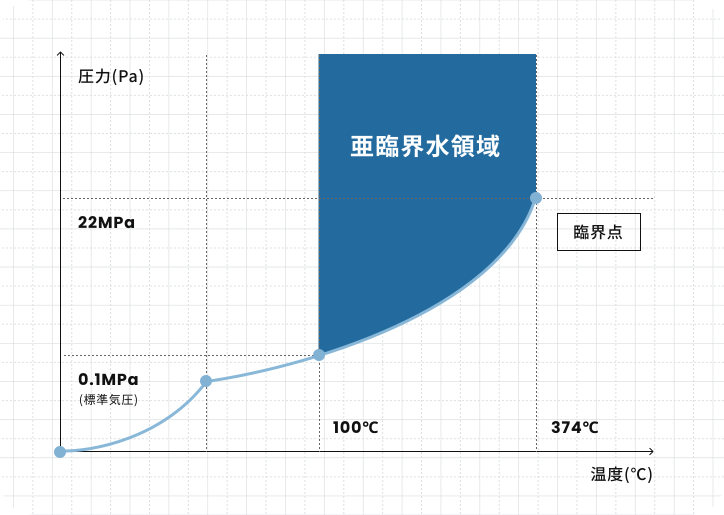
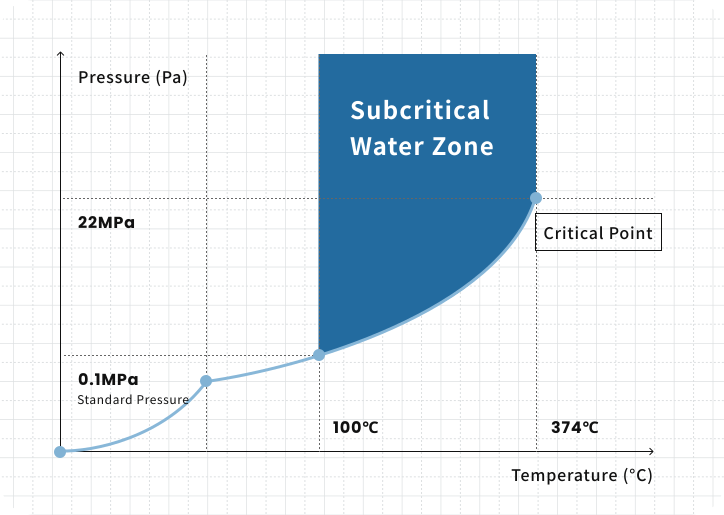
Subcritical water is high-temperature, high-pressure water at temperatures below 374°C and pressures below 22 MPa.

Subcritical water is high-temperature, high-pressure water in an intermediate state between liquid and gas (below the critical point) with strong hydrolytic properties. By utilizing these hydrolytic characteristics, it is possible to achieve zero-CO₂ industrial waste treatment, create high-value resources, and neutralize hazardous substances such as PFAS.

ウォーターアリンテック株式会社 ウォーターアリンテック株式会社

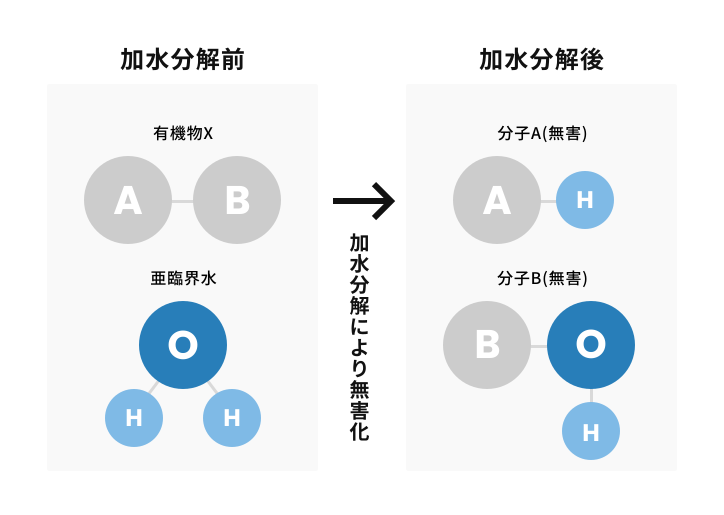
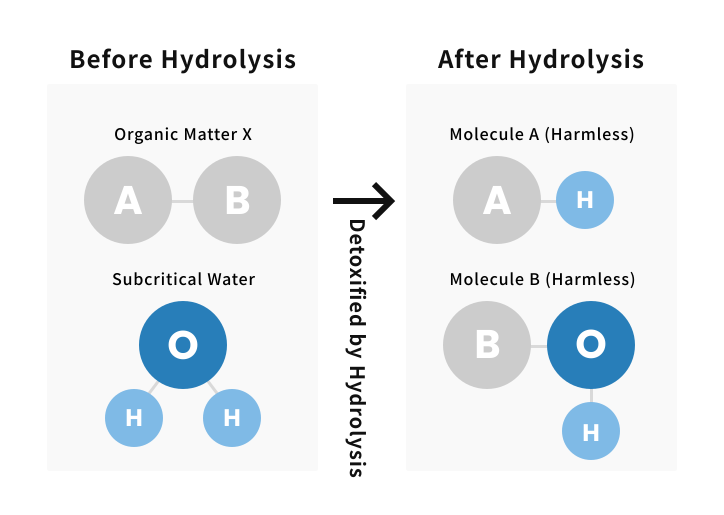
Hydrolysis breaks down PFAS molecules and generates new (harmless) compounds.

When subcritical water is applied to organic matter, it breaks the molecular bonds and generates new molecules. These newly formed compounds are rendered harmless, turning much industrial waste and organic substances into safe materials through hydrolysis.

ウォーターアリンテック株式会社 ウォーターアリンテック株式会社

Comparison

Incineration vs. Subcritical Water Treatment

A method that does not emit CO₂ or dioxins.

Compared to incineration, this method excels in environmental, economic, and operational aspects. Environmentally, it allows processing without CO₂ or dioxin emissions. Economically, both initial and operating costs are lower. Operationally, it is not only safe but also superior in terms of space requirements and flexibility.

Scroll Horizontally

Environmental Aspects

Economic Aspects

Operational Aspects

Need for Waste Separation
Food Waste Compatibility
CO₂, smoke, and toxic gases.
Odor
Incineration Ash (Residual Waste)
Initial Costs
Operating Costs
Utilization of Residual Resources
Safety
Processing Capacity
Required Space
Flexibility (handling fluctuations in waste volume)
Subcritical Water System
Incineration

Feature

Feature

ウォーターアリンテック株式会社

Zero-CO₂ Industrial Waste Treatment

Because no combustion is involved, this waste treatment technology eliminates CO₂ and dioxin emissions, making it environmentally friendly.

ウォーターアリンテック株式会社

Creation of high-value resources.

Decomposes waste to regenerate new resources and energy. Can produce fertilizers, animal feed, electricity, and hydrogen.

ウォーターアリンテック株式会社

Proprietary agitation technology maximizes processing performance.

High-efficiency decomposition achieved through corrosion-resistant, highly durable materials and optimized control. Our proprietary agitation technology also enables the treatment of waste that is otherwise difficult to decompose.

Flow

Process of Subcritical Water Treatment

The process is simple, enabling safe and low-cost operation.

Input

ウォーターアリンテック株式会社

Waste can be fed directly as delivered.

Treatment

ウォーターアリンテック株式会社

Decomposition processing using high-temperature, high-pressure steam.

Discharge

ウォーターアリンテック株式会社

Depending on the type of waste, the output may be liquid or powder.

Generation

ウォーターアリンテック株式会社

Generates new resources and energy in harmless forms.

Treatable Waste

Industrial Waste That Can Be Treated

In addition to the types listed below, a wide variety of waste can be processed without separation.

Spec

Spec

Customized manufacturing is possible depending on the amount of industrial waste to be treated and the available facility space.

Scroll Horizontally

Processing Capacity
Processing Speed (per cycle)
Dimensions (W × D × H)
Weight
Temperature Range
Pressure Range
Power Consumption

Small Scale

Approx. 3.5 tons per cycle
2,370×5,596×5,274mm
13,500kg
37kW/h

Medium Scale

Approx. 7 tons per cycle
2–5 hours
1,900×7,253×6,180mm
29,500kg
180〜250℃
1.4〜2.9MPa
55kW/h

Large Scale

Approx. 8.5 tons per cycle
1,900×9,330×5,600mm
31,000kg
75kW/h

Note 1: Classified by multiple factors such as equipment size and processing capacity

FAQ

FAQ

What are the economic benefits of introducing subcritical water treatment systems?

Compared to conventional incineration, subcritical water treatment often reduces annual operating costs by 20–30%, with additional economic benefits expected from CO₂ emissions trading. Revenue can also be generated from valuable byproducts (such as oils) recovered during the treatment process, and disposal costs are reduced by decreasing the volume of final waste. Typically, a return on investment is seen within 3–5 years, with substantial long-term cost advantages.

Does subcritical water treatment generate harmful substances?

Subcritical water treatment is an eco-friendly method that uses only high-temperature and high-pressure water. Unlike incineration, it does not generate harmful substances such as dioxins. Furthermore, the treated wastewater is processed appropriately and discharged in compliance with environmental standards, ensuring safety and reliability.

How long does it take to start operations?

From contract to system operation, it generally takes about 6–8 months. This includes design, manufacturing, installation, test runs, adjustments, and operational training. The timeframe may vary depending on the characteristics of the facility and the type of waste to be treated, but our project managers thoroughly oversee scheduling to ensure operations start on time.

What Is the Subcritical Water Integrated System?

The Subcritical Water Integrated System is a comprehensive solution consisting mainly of subcritical water treatment equipment, pressurized flotation separation systems, and various fermentation devices. By utilizing this system, it is possible not only to achieve zero-CO₂ industrial waste treatment but also to neutralize hazardous chemical substances such as PFAS.

ウォーターアリンテック株式会社

For those considering implementation

Please contact us via the document download link below or through the inquiry form. Our representatives will provide you with detailed explanations and further information.